
Radcliff Address Sources by Era
No single roll lists every prior owner or occupant. The strongest Radcliff previous residents search starts with Hardin County property and deed systems, then layers household sources over the years in question. One catch shapes the whole effort. The modern deed index runs by name, not address. Older books, maps, census images, and local indexes bridge the gaps where today's street name or city boundary did not yet exist.
| Source | Confirmed years | Where held | What it shows |
|---|---|---|---|
| Current deed index | 05/01/1938 to 08/20/2026 displayed | Hardin Clerk eSearch | Parties, type, date, book/page, legal text |
| Archival deed books | 1793 to 1938 | Clerk archives | Earlier grantor, grantee, book/page |
| Federal census | 1790 to 1930 images listed | HCPL HeritageQuest | Household at a census date |
| Historic maps | 1797 to 1935 items listed | Hardin County History Museum | Road and place-name context |
| Radcliff directories | Local run not confirmed | HCPL or KHS inquiry | Possible address occupancy |
Certified dates mark an index boundary only. They do not promise that every image sits online. Save the result number, instrument type, and book/page, since those details make a counter, phone, mail, or written request far more precise.
Walk Radcliff Deeds Backward
Begin at the Hardin County PVA property page. The county says a parcel search may show owner names, parcel or map ID, situs and mailing addresses, sales, assessment data, and building facts. Situs is the physical parcel address. Mailing is where notices go, and neither field proves who actually lived in the house.
- Copy the owner spelling, parcel number, lot, sale date, book/page, and legal description.
- Use the Clerk eSearch to find that owner as grantee, the party receiving title.
- Open or request the deed and copy the grantor, the party transferring title.
- Search that grantor as an earlier grantee, matching the same land description.
- At the modern cutoff, request the older book/page from the Elizabethtown recording office.
- Grantor and grantee
- The grantor transfers an interest; the grantee receives it.
- Chain of title
- The linked run of recorded transfers for the same land.
- Legal description
- The lot, acreage, or boundary wording that survives a street-name change.
The clerk's QuickStart is blunt: its land system does not index by address. Search initials, spouses, trusts, estates, and firms, then use the legal text to reject results tied to other parcels.
Read Radcliff Deed Results
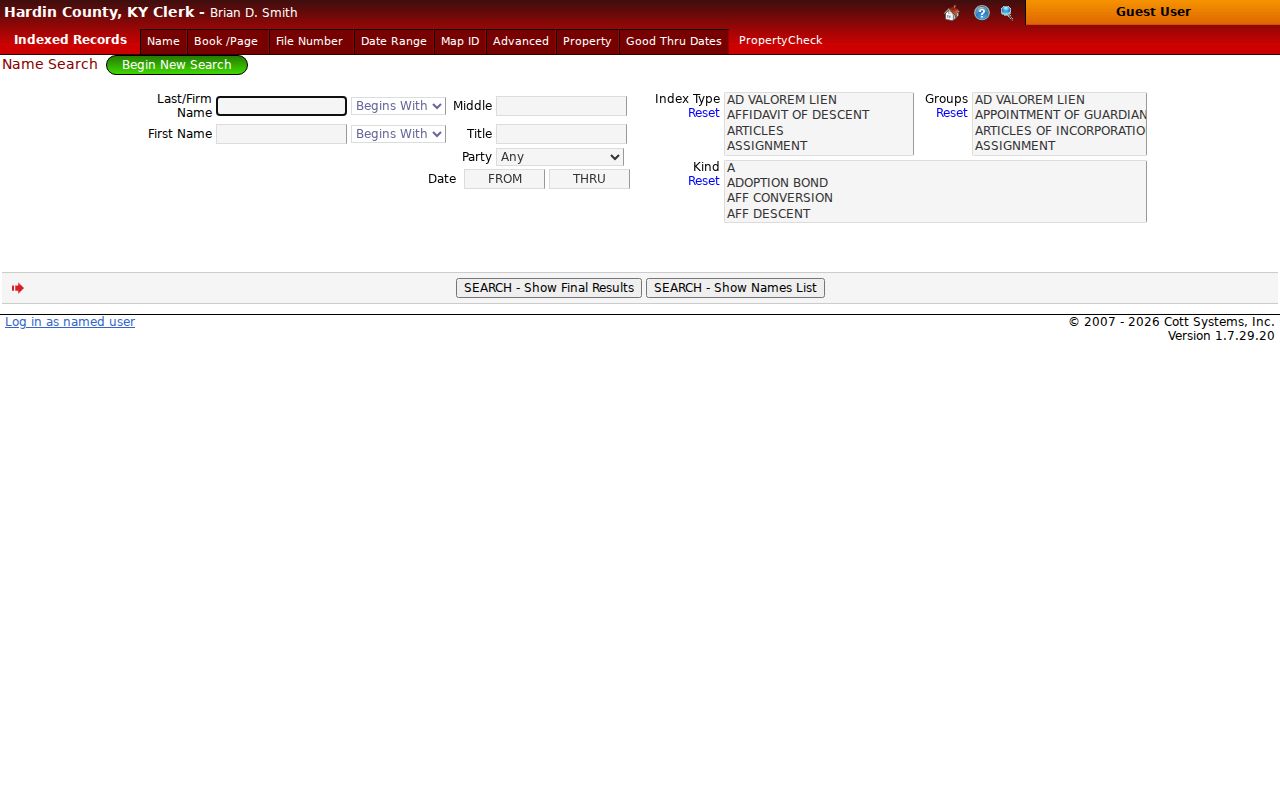
Cott Recordhub offers Last/Firm, First, Middle, Title, Party, date, Index Type, Groups, and Kind controls. Results may show parties, a recorded date, document code, location text, and book/page, while the deed image or certified copy can hold more. Open the Hardin County indexed-record search. Use the PVA spelling. Keep the date broad enough for delayed recording.
No image in the system? Contact the recording office in Elizabethtown. The Radcliff branch handles other clerk needs, but official instructions route recordings to the county seat, and published open-records routes also support written requests.
Radcliff Records Cross 1938
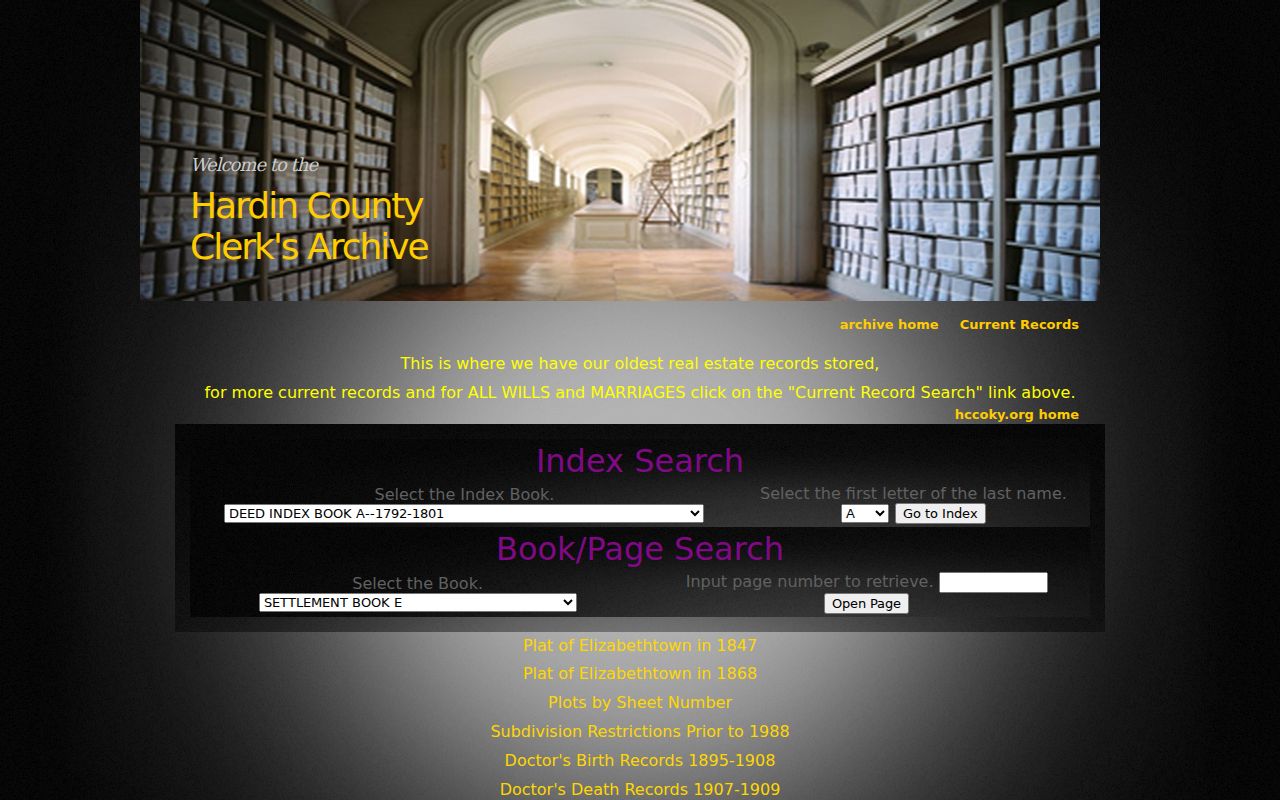
The archive bridge is a real local strength. Certified dates display deeds from May 1, 1938, with archival deed books covering 1793 through 1938, books A-Z and 1-99. A result near that line needs a book/page check. Mortgages, restrictions, plats, liens, releases, and affidavits can explain a transfer that a deed alone does not. Review the Hardin Clerk archive before requesting a copy.
PropertyCheck sends notice of new instruments. The clerk calls it free but warns users not to enter payment details during its account update. It does not rebuild old occupancy or certify title.
Place Radcliff Households in Time
Owners are only half of a previous residents inquiry. Pair each transfer with a nearby census year, a directory or phone-book year if confirmed, a newspaper date, and vital or probate events. A census captures one enumeration date. A directory may name an adult occupant between census years, but neither replaces the deed.
- Create a dated timeline with separate owner and occupant columns.
- Search HCPL HeritageQuest near each released census year.
- Ask HCPL about Radcliff, Fort Knox, New Stithton, reverse directories, yearbooks, and newspapers.
- Use death, cemetery, obituary, probate, or will records to explain an estate transfer.
No official source confirms a full Radcliff city-directory run. The Radcliff Directory Book page covers the verified collection routes. Record only what a volume states: year, publisher, address form, and whether it names an owner or occupant.
Find Radcliff History Offline
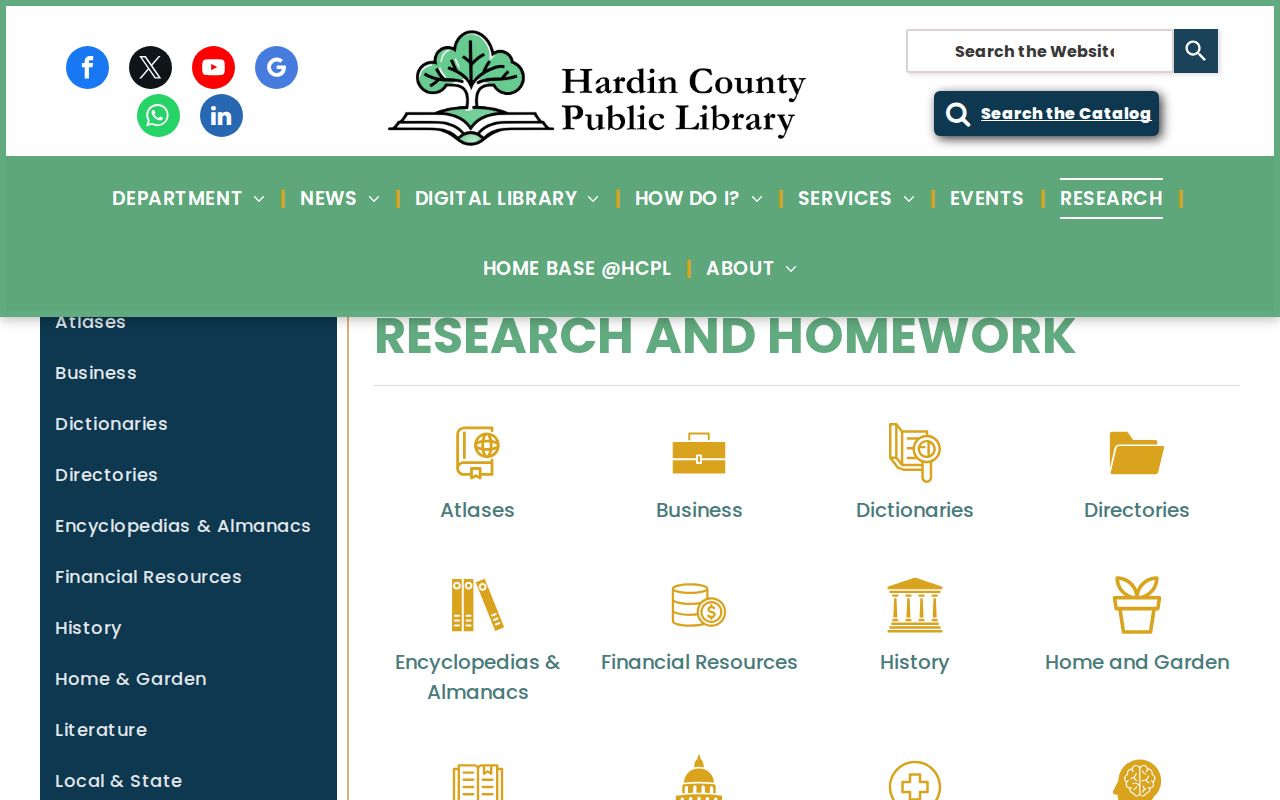
Hardin County Public Library offers HeritageQuest, databases, interlibrary loan, scans, and in-library history-room or newspaper material. It publishes no confirmed house-history guide. Ask staff to verify a title and year first. The HCPL research directory shows its Local & State and directory categories.
The Hardin County Genealogy Society publishes census, marriage, probate birth and death, newspaper, and obituary material. Its query service allows one surname request per month. KHS and KDLA add catalog, mail, and records-request routes.
Older Names Hide Radcliff Addresses
Today's Radcliff labels stop at the deed era. Official history notes Mill Creek, the 1919 subdivision and naming of Radcliff, New Stithton's 1932 absorption into Fort Knox, and the 1956 incorporation. So search county, road, subdivision, and legal terms rather than forcing the modern city name onto every year. Try Dixie Boulevard and Dixie Avenue. Try Lincoln Trail variants too. Mill Creek, New Stithton, Camp Knox, Fort Knox, and subdivision names all earn a turn. No Radcliff renumbering project or Sanborn run is confirmed. The museum's listed maps from 1797 through 1935 are the verified route for road continuity.
Saved records. The third Hardin County courthouse burned in December 1932, but the museum says county records were saved.
Never declare a blank year. Instead, check the book and index, carrying book/page, surname, place, and record type between custodians.
Close Radcliff Household Trails
An address story rarely ends with a departure deed. A death can open a probate file. It may also lead to a will, a cemetery entry, a funeral-home record, or an obituary. The Hardin County Genealogy Society publishes probate death and birth material. It also offers marriage indexes, newspaper abstracts, and obituaries. The clerk archive links doctor birth records from 1895 through 1908. It also links doctor death records from 1907 through 1909. Treat those as doctor-register files rather than complete civil indexes.
A deed moving through an estate deserves extra care. Record the fiduciary wording and search the probate name. When a bank, trustee, or company takes title, keep that entity listed as the party. Wait until a later recorded document names a person. Kentucky Veterans Cemetery Central may hold an interment, and its office answers inquiries by phone. The cemetery publishes no public name search. Its official page reports operation since June 2007 and gives a manager phone route. North Hardin Memorial Gardens is another local custodian to call, not a government index.
The state archive rounds out the trail. KDLA accepts records requests. It also publishes research guides covering county, land, census, court, probate, and vital material. A strong request includes a name and the county. Add a date range, the record type, and any book or page already found. Those details keep the Radcliff search focused and help staff tell same-name residents apart.
Use Radcliff Resident History Carefully
A recorded deed owner is never a complete household roster. An exemption flag is an assessment clue. A mailing address is not the situs. An obituary may join relatives and places, but it can omit a move or use an informal place name. Always carefully mark each separate finding as confirmed, probable, or unresolved.
For a death, switch to obituary, cemetery, probate, and will records. For a trust or estate, search the filing name. Kentucky OVS, county marriage or divorce files, and public indexes have separate rules. Full birth records open after 100 years and death records after 50 years under KRS 213.131.
A sound address timeline also records negative searches. Write down the spelling, date range, index type, and portal used. Then test a wider Hardin County place name, a spouse, an estate, a subdivision, or the legal description. If the trail still stops, ask the clerk whether the volume is offline or held by a records center. KDLA accepts county-specific deed, probate, court, census, and vital requests, with research and copy charges based on the service. A blank web result alone never proves that no record exists.
Separate source dates from event dates. A deed may be recorded after it was signed, an obituary appears after a death, and a directory represents one publication cycle. Keeping those dates in separate columns prevents a later record from being mistaken for the day a household arrived or left.
Lawful use. Research Radcliff previous residents for family or house history, and never use an address trail to watch, harass, or harm a person.